

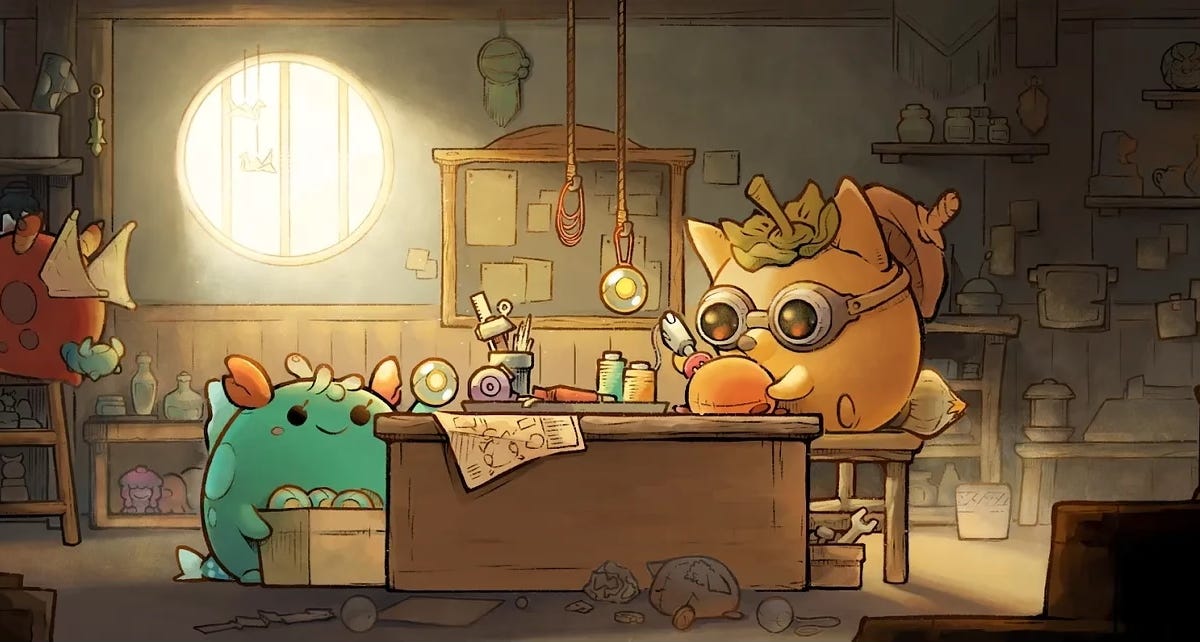

Welcome to Atia’s Lab Notes 2026 #3.
Playtest 2 is over. A community emerged. Your feedback has been received. The team has been building ever since.
This topic covers what we learned in Playtest 2, what’s coming to PvP, and our first real look inside the terrarium.
Quick note: The following is not a release promise, but rather a snapshot of the current situation.
Playtest 2 gave us what we needed: data, feedback, and a clearer picture of where the game stands.
Every bit of feedback determines the shape of the game. Thank you to the playtesters who attended.
Some of you said the core loop is working.
“The core gameplay loop is practically complete in terms of kill times, item stats, item costs, mob difficulty scaling, dungeon rewards, difficulty, weapon rarity and drop rates. And in recent patches, combat is fast, modern and addictive. Don’t make things worse in future builds. Add higher level dungeons and higher rarity items. Don’t nerf them, just buff them.”
The dungeon lands:
“The gameplay is very addictive, with a combination of strategy and a bit of luck. Especially when playing dungeons, many lessons come from the experience of losing your best set of gear.”
Sharper feedback. We read every line:
“The bugs have a huge impact on the experience. You can’t use your strongest weapon (bow bug) and your dagger still sends you off the map. Other than the bugs, the game isn’t fluid or responsive enough.”
“This is a visibility bug in Android. Enemies and NPCs sometimes don’t display properly, only their HP bar is visible. This makes navigation and combat much more difficult than intended.”
“Many of the weapons feel very slow, the combat lacks dynamism, and the abilities need to be more visually appealing.”
bow. dagger. Android Visibility. Weapon speed. Ability VFX. It’s all logged and it’s all in the queue.
One piece of feedback emerged from almost every response:
“It lacks PvP, and has some major bugs, such as the bow, which hasn’t worked for me since playtesting began, making it the easiest weapon to use.”
Next is PVP.
Playtest 2 received hundreds of responses. All of these shaped the next phase. But the playtests also told us something else.

Execute real-time operations through external platforms such as: dojo.axieinfinity.com factory. When real-time operations are external to the game client, the game team can focus on what matters most: the game. The platform executes the activity. Teams make the world. Separation works, so we’re keeping it.
Moving on to the next playtest.
Each playtest has a focus. Playtest 2 was PvE. The following is all PvP.
You may remember our early PvP footage from the Lunacian Lounge.
There is a big demand for 3 to 3. Play with your friends. Build axis synergy across teams. We’re building this by listening to you.

In this playtest, all players use preset axes.
The goal: to stress test the PvP system itself. If all goes according to plan, PvP will begin in the coming months.
We won’t have to wait long this time.
Codex Season 1 is about halfway through.
Watching the lore revealed was the most exciting part of this release. What players read in the Codex connects to what they encounter in Atia’s Legacy. It’s a vision that works as intended. Kilnbane now lives on both sides of the wall.

There is still room for growth in knowledge transfer. I’ve been thinking a lot about formats and channels that I haven’t tried yet.
With the release of Codex Season 1, the team shifted its focus to terrariums. This is the part we’ve been waiting to share.
Terrariums V1 is in active development. Art, smart contract engineer, frontend, backend and system design. All teams are working in parallel on one of the most cross-functional builds we’ve ever run.
V1 is the first layer of a much larger vision. A fully formed terrarium takes time. But V1 is real. In V1, we are building the economic fundamentals first. That’s where the gameplay layer begins.
You’ve already seen one image.

This is a land plan. Open to all Lunacians.
We won’t stop there. Beyond the shared plot, your own plot, your Lunacia work, is also in progress.

Each biome is a character, not a background.

One of the design questions we’ve been wrestling with is balance.
Axie’s lands have always produced rewards. AXP flowing to multiple axes at once, token rewards in the background, and a passive engine that runs regardless of whether you are playing or not.
It works. But we are beginning to ask whether passive generation should be the whole story.
Our answer is that this should not be done. It has to be a choice. It’s a meaningful game with compromises that suit the way you actually play.
This thinking extends to the broader ecosystem. The terrarium connects to what the Lunacians already own.
-
collectible axes
-
land item
-
accessories
-
Axie core level
Beyond that, your collection becomes a place to live, interact, and have meaning. We are still designing the shape. The direction is set: utility that fits what you already have.
Here’s what we’re most excited about:
Core of V1: Hourly tick system.
Every hour the world moves forward. Resource movement. The activity is resolved. progress compound. A pulse that transforms a plot of land from a static image into a living sculpture of Lunasia.
Designing around ticks increases clarity. What happens every hour? What’s worth checking out? What rewards can give you attention without asking for it?
These are the questions that form V1. The answer is coming.
Soon, Lunacians.