
Beyond Yield Farming: How Curated Vaults Are Redrawing the Boundaries Between DeFi and Money Management



Alyssa Davidson
Posted: May 22, 2026 8:16 AM Updated: May 22, 2026 8:16 AM

Edit and fact check date: May 22, 2026, 8:16 AM
briefly
DeFi vaults are evolving into programmable investment vehicles, reshaping capital allocation and challenging traditional asset management with smarter, more curated on-chain strategies.
The lines between DeFi and traditional asset management are blurring. And the next battleground may be one that most investors have barely even heard of yet.
Vault started out as a simple monetization tool, a way to deposit your cryptocurrency and watch your profits accumulate. But gradually they evolved into something much more sophisticated. In other words, it has evolved into a programmable investment vehicle that allows you to manage collateral, allocate across strategies, and enforce risk parameters without a phone call or term paper.
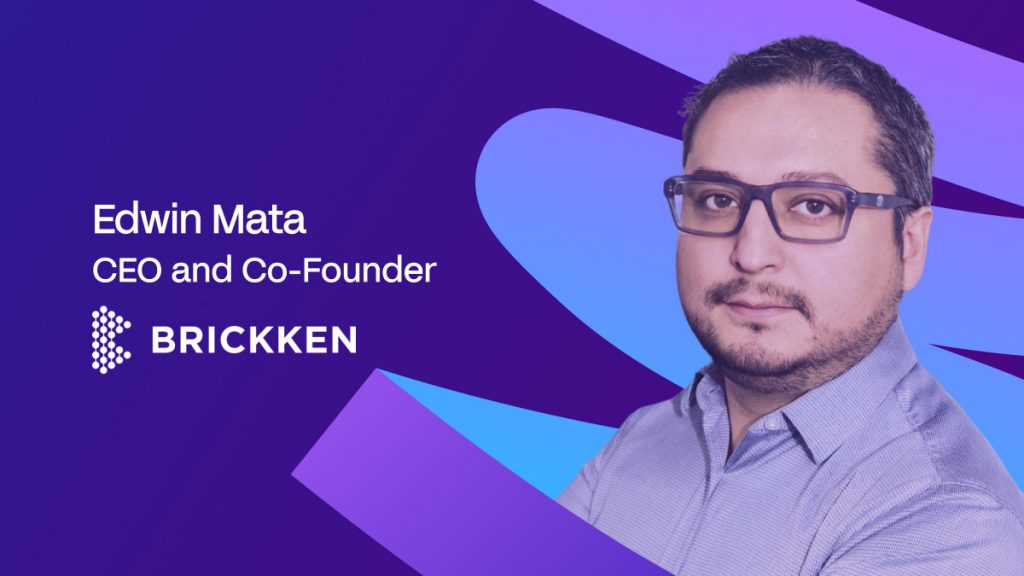
Edwin Mata, CEO and co-founder of Bricken, believes this change is more than a product upgrade. This is about reimagining how capital moves on-chain. We sat down with him to find out whether DeFi vaults are the new cryptocurrency funds, what’s driving investors toward select strategies, and what happens when programmable infrastructure starts doing what hedge funds, money market funds, and credit managers have always done, faster and cheaper on public ledgers.
Are DeFi vaults becoming the next evolution of cryptocurrency funds? Why or not?
yes. Vault is becoming a programmable investment product. They are moving beyond simple yield products to structured investment vehicles that can allocate capital and manage exposure according to defined risk parameters.

DeFi vaults can be allocated across on-chain strategies, while RWA vaults can be allocated to tokenized credit, treasury, receivables, real estate liabilities, and other income-generating assets. Strategies such as funds are being rebuilt based on programmable infrastructure.
What are driving the shift toward curated vault strategies instead of traditional loan pools or passive yield products?
Investors want managed exposure. Access to protocols alone is no longer sufficient. Markets have matured to the point where investors are interested in who chooses collateral, how they manage risk, and how they reallocate capital when circumstances change.
Curated vaults simplify complexity by simplifying packaging strategy, collateral selection, risk control, liquidity terms and yield generation into a single product. Investors do not have to manually manage protocol selection, liquidation risk, and liquidity conditions.
How important is personalization becoming in DeFi? Are investors increasingly looking for a variety of risk profiles, collateral choices, and return strategies rather than a one-size-fits-all product?
Very important. Personalization is becoming a necessity. Investors are increasingly seeking a variety of risk profiles, collateral types, terms, repayment terms, and revenue streams.
Conservative stablecoin vaults are not the same product as private credit RWA vaults or leveraged DeFi strategies. It would be a mistake to treat these as interchangeable deliverables. It is designed to suit a variety of investors, risk appetites and liquidity needs.
The next phase of DeFi will be won by products that can match capital to the right strategy, risk profile, and collateral base.
How might the rise of vaults change the cryptocurrency industry in the coming years, especially with regard to capital flows, liquidity, and competition between protocols?
Vaults can become a primary allocation layer for on-chain capital. Their rise will change the competitive structure of DeFi. Protocols will compete not only for direct users, but also for vault liquidity and the trustworthiness of curators.
Curators will influence capital flows, collateral acceptance, and protocols that become part of institutional-level strategies. Investors will choose strategies based on risk-adjusted returns rather than headline APY.
Vault-based allocations push DeFi away from tracking short-term returns and toward more disciplined capital allocation. The winning protocols will be those that can demonstrate depth, liquidity, risk control, and sustainable returns.
Can vault-based strategies eventually compete with or replace some of the traditional asset management practices such as hedge funds, money market funds, and credit funds?
Yes. This is especially true in areas such as money market products, private lending, hedge fund strategies, and structured return products. Vault won’t immediately replace traditional asset management, but it may compete directly with some. Allocation, risk management, reporting, access, and execution can be moved to programmable infrastructure.
The question is not whether DeFi will replace money, but whether programmable vaults can provide the same investment capabilities with better transparency, lower operational friction, and wider distribution.
What risks might emerge as more capital moves into select vault strategies, particularly with regard to concentration, liquidity, or reliance on a small group of managers?
The main risks are admin concentration, liquidity mismatch, poor collateral quality, opaque strategy decisions, smart contract risk, valuation risk, and off-chain enforcement risk of RWA vaults.
Vaults improve transparency but do not eliminate risk. More responsibility shifts to curators, strategic design, and the underlying collateral framework.
If too much capital follows a few curators, or if curators make similar assumptions, vaults can amplify stress in volatile markets. Liquidity conditions, collateral quality and clearing mechanisms are as important as advertised returns.
The industry should not sell safes as passive products. This is a managed strategy and should be evaluated with the same principles as any fund, credit product or structured investment vehicle.
disclaimer
In accordance with the Trust Project Guidelines, the information provided on these pages is not intended and should not be construed as legal, tax, investment, financial or any other form of advice. It is important to invest only what you can afford to lose and, when in doubt, seek independent financial advice. For more information, please refer to the Terms of Use and any help and support pages provided by the publisher or advertiser. Although MetaversePost is committed to accurate and unbiased reporting, market conditions may change without notice.
About the author
As a dedicated journalist at MPost, Alisa specializes in the broad areas of cryptocurrency, AI, investing, and Web3. With a keen eye for new trends and technologies, she provides comprehensive coverage to inform and engage readers about the ever-evolving digital financial landscape.
more articles
As a dedicated journalist at MPost, Alisa specializes in the broad areas of cryptocurrency, AI, investing, and Web3. With a keen eye for new trends and technologies, she provides comprehensive coverage to inform and engage readers about the ever-evolving digital financial landscape.

more articles