
Adaption’s AutoScientist automates model fine-tuning through closed-loop training that outperforms human-designed configurations.


Alyssa Davidson
Posted: May 14, 2026 8:18 AM Updated: May 14, 2026 8:18 AM

Edit and fact check date: May 14, 2026, 8:18 AM
briefly
Adaption unveils AutoScientist, a system that automatically personalizes AI models by optimizing both training data and learning processes for specific tasks.
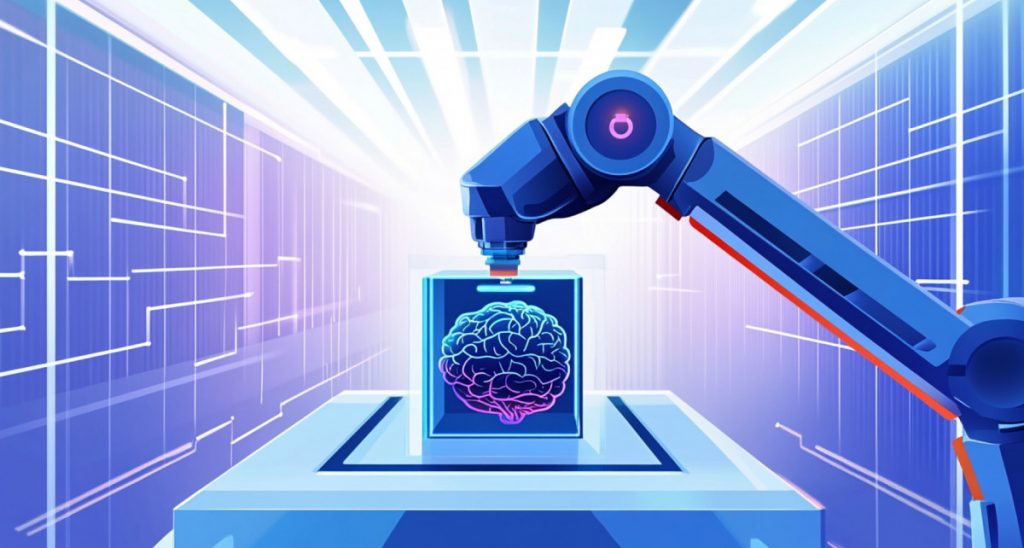
Adaption, an AI startup founded by Sara Hooker, former Vice President of Research at Cohere, has introduced a new system called AutoScientist, designed to automate the process of adapting AI models to specific tasks by jointly optimizing training data and learning configurations. The system is positioned as a step toward automating AI research and development workflows, with the goal of reducing the manual effort typically required for model fine-tuning and experimentation.
AutoScientist is described as an end-to-end framework that co-optimizes datasets and training recipes simultaneously, iterating in a closed loop where both data selection and model training parameters are continuously adjusted. This process continues until performance stabilizes around defined goals, allowing the system to effectively improve both what the model learns and how it learns, without ongoing human intervention.
According to the company, the tool is intended to reduce the time needed to move from an initial concept to a deployed custom model, potentially shortening the development cycle from weeks to hours. This is also presented as a mechanism to expand access to model customization beyond machine learning experts, allowing users without deep technical expertise to influence not only the prompts but also the default behavior of the trained system. This approach is structured to be particularly relevant to organizations seeking to more effectively leverage proprietary data sets within their AI systems while also fine-tuning models for domain-specific languages, structured outputs, or efficiency constraints such as latency and cost.
Internal evaluations referenced by the company show that AutoScientist shows improved performance compared to baseline models across a variety of dataset sizes between 5,000 and 100,000 cases and across multiple model architectures that allow for fine-tuning. The reported results show consistent gains regardless of domain, with performance measured using internal evaluations tailored to specific vertical applications.
Additional comparisons presented in the evaluation framework show that AutoScientist achieves higher average performance than configurations designed by human researchers, including experienced AI engineering staff. In this test, human experts chose training settings based on their knowledge of model architecture, dataset characteristics, and domain requirements, and AutoScientist was given the same inputs along with the ability to iteratively improve its own configuration using historical run data. When using the automated system under these conditions, the overall results improved from 48% to 64%, with an average performance improvement of approximately 35% across experiments.

AutoScientist aims to democratize frontier model fine-tuning while demonstrating cross-domain stability.
Further benchmarking across multiple applications shows that the system is not very sensitive to any particular domain and that gains were observed in eight different areas. AutoScientist reports that this consistency is notable, considering that while it is known to provide more reliable improvements across a wide range of tasks and datasets, many existing fine-tuning approaches tend to underperform outside narrow or highly curated settings.
The system is positioned as part of a broader effort to automate the model development process, particularly in areas related to long-term inference, which remains an ongoing challenge to AI reliability. The developers say AutoScientist represents an initial step toward reducing the need for manual intervention in the model training pipeline, and future research directions are focused on enabling more immediate forms of adaptation that may not require traditional training cycles.
In addition to its technical goals, this release is also part of an effort to expand access to model customization, allowing a wider range of users to configure AI systems for specific applications. This tool is free for the first 30 days. According to the frame provided, the broader goal is to reduce barriers to AI model development and expand the ability to create custom systems beyond small groups of expert researchers concentrated in major laboratories.
The key contextual argument highlighted in the presentation is that only a small number of people globally have the expertise needed to properly train and fine-tune cutting-edge AI models, and much of this knowledge is concentrated in a limited number of major research laboratories. It is suggested that if systems such as AutoScientist can successfully automate this aspect of expertise, the process of building custom models for individual organizations and specific use cases could become more accessible and practically achievable.
disclaimer
In accordance with the Trust Project Guidelines, the information provided on these pages is not intended and should not be construed as legal, tax, investment, financial or any other form of advice. It is important to invest only what you can afford to lose and, when in doubt, seek independent financial advice. We recommend that you refer to the Terms of Use and help and support pages provided by the publisher or advertiser for more information. Although MetaversePost is committed to accurate and unbiased reporting, market conditions may change without notice.
About the author
As a dedicated journalist at MPost, Alisa specializes in the broad areas of cryptocurrency, AI, investing, and Web3. With a keen eye for new trends and technologies, she provides comprehensive coverage to inform and engage readers about the ever-evolving digital financial landscape.
more articles
As a dedicated journalist at MPost, Alisa specializes in the broad areas of cryptocurrency, AI, investing, and Web3. With a keen eye for new trends and technologies, she provides comprehensive coverage to inform and engage readers about the ever-evolving digital financial landscape.

more articles