


Time flies so fast. Six months later, on March 31, 2026, the Wrong Biennale will end.
The Wrong Biennale is an international digital art exhibition held online and in physical galleries and viewed by millions around the world.
The seventh edition, which runs from November 1, 2025 to March 31, 2026, focuses on artificial intelligence in art. Featuring work across visual art, video, text and sound, it highlights how artists use AI and machine learning in their creative processes.
Over time, it has grown into a major global community and a major event in the digital art world.
Our final decision to participate in The Wrong Biennale quickly showed us one thing. Virtual exhibitions are not much different from the real world. Expectations, deadlines, and collaboration all operate at the same level.
We arrived late with simple instructions to create an exhibition using AI. What followed was a quick push to find artists, meet submission deadlines, and create a website pavilion where we could not only curate shows around the world but also translate our exhibitions and OpenSim to external audiences. The results were beyond our expectations.
Finding artists was easy. We had already worked with all of them before. We knew their work, drive and dedication. With tight deadlines and huge displays, that level of trust made a difference. I had the pleasure of working one-on-one with each artist in the online exhibition and combining videos and images showcasing their work. It was a really good experience. I would love to work with them all again immediately.
What surprised me most about the AI-inspired art was how different the results were. Despite their common requirements for using AI, the two exhibitions were not similar. Artists approached technology in completely different ways. Some used it to enhance their work, while others used it to form entire concepts. The takeaway was clear. The tools used may be the same, but the vision behind them makes all the difference.
The show was about technology, but what happened behind the scenes was entirely human. Many of us had worked together before, some in passing. This time was different. We got to know each other not just as creators, but as collaborators. This was a true group effort.
We workshopped together on AI tools, exchanged tips and techniques, shared our findings, and sometimes even our frustrations. I had a sincere wish for everyone to succeed. Instead of competing for attention, we helped each other shine, and that made the final exhibition stronger than anything either of us could have created alone.

“Helping to curate a two-month build with 15 artists was initially a daunting thought, but it ended up being one of the most rewarding collaborative experiences I’ve ever had,” said Cooper Swizzle, curator and artist behind Kitely and The Curiosity Zone. “The group’s energy, generosity and willingness to learn from each other made the process outstanding.”
This show had a deeper meaning for us as well. This marks the final exhibition for Wolf Territories artist Luna Lunaria. Unfortunately, she passed away not long after the show began. At the time we were focused on tasks, deadlines, builds, and collaboration, but looking back it feels different. It was my last chance to create, share ideas, and hang out with her. Her work and her presence remain a part of the show and a lasting part of her legacy. She will be deeply missed.
“Luna was not only an amazing artist, but a special friend,” said Tenth Dimension grid artist Star Ravenhurst. “She was always willing to help, share her talents and support the creative endeavors of others. It was truly an honor to have the opportunity to know and work with her.”

Mixing the real and virtual worlds is nothing new. The folks at OpenSim have been working on this for years. But for us, it was really exciting to be part of a big physical show. The idea that people outside of OpenSim would see our work was new to us, and we were ready for it.

“This will not be the last time we participate in a physical art show. We are already looking at the next opportunity,” said Koshari Mahana, curator and artist of Kitely and The Curiosity Zone. “There is so much talent in OpenSim that deserves more visibility, and it would be great to share more of this with the outside world.”
The response was amazing. The Synthetic Dreams website, an online showcase for Wrong, has been viewed well over 2,000 times. In total, my exhibitions around the world have welcomed hundreds of visitors with over a thousand visits. We’ve been featured on The Wrong’s Instagram and official press page. We’ve also had the pleasure of hosting not one, but two Hypergrid Safari visits from the Virtual World Education Consortium, Thirza Ember, and hosting a tour led by Thirza at the OpenSimulator Community Conference during the conference weekend.

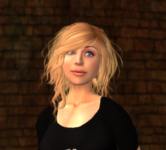
“The Synthetic Dreams Pavilion was an incredible achievement,” said Thirza Ember of Hypergrid Safari. “There are so many thoughtful, beautifully constructed installations. The sheer ingenuity, both in the concepts explored and the technology used to convey them, was truly eye-opening. It was truly amazing!”
After Hypergrid Safari, Roland Francis shared his thoughts on the Safari blog. “This is truly an outstanding piece of digital art,” he said in the comments. “The level was so high that I was blown away with every click. The detailed visual experience went even deeper. The mesmerizing interpretation of real artists and their work, the incredible blend of flavors, was truly incredible.”

“Synthetic Dreams was an incredible experience filled with creativity, beauty, humor and wonder,” said Carla Kincaid Yoshikawa, consultant at Training in the 21st Century. “Using AI as a tool, artists have created immersive 3D environments to bring their visions to life. Each exhibition has been unique and captivating, sometimes beautiful and mysterious, sometimes informative, provocative and always captivating.”
“I created the video using the exhibition as a case study to not only highlight AI as a creative tool, but also to demonstrate how environments built within a 3D world can function artistically, socially and educationally,” she added. “We salute the curators and all the artists who made this experience so memorable.”
“What’s most important to me is how art inspires art,” said artist Forrest Azzure. “The dreamy builds I came across while wandering the expo started to wax poetic in me. Would I do it again? Yes, but without using AI. What we created was a statement that only needed to be done once.”


“Based on this experience, I am excited for future collaborations and want to continue to push the boundaries of what is possible,” said Kitely artist Yeelinda Blue. “Thank you to all the artists who made this trip an unforgettable experience.”
As the Biennale comes to a close, the lessons we have learned will be something we will take with us. The topic of the show was AI, but ultimately it wasn’t the focus. It’s simply a tool that helps us explore new directions and bring the unexpected to life. But in the end, the issue was about artists and their creativity.
Virtual and reality are no longer separate spaces. They operate with the same expectations, the same standards, and the same potential to connect people.
We have seen what can happen when cooperation replaces competition. And we’ve found that the work we create in OpenSim doesn’t have to remain subdued, but can reach far beyond that.
Above all, we were reminded that behind every building, every exhibition, every idea, there are the people who make it important and the traces they leave behind.
In the end, The Wrong turns out to be exactly the right thing to do. And yes, without a doubt we would do it again.

While The Wrong Biennale officially wrapped at the end of March, Kitely owner Ilan Tochner has extended the exhibition for another three months, until June 31, 2026.
“Synthetic Dreams, the Wrong Biennale Pavilion, is a great example of what OpenSim creators can achieve,” said Ilan Tochner, CEO and co-founder of Kitely. “It would have been a shame to close, so we have offered to extend it for a further three months. We are proud to be hosting such a powerful exhibition at Kitely and would highly recommend anyone who has not yet seen it to take the opportunity to visit.”
Visit the Wrong Biennale Pavilion at Kitely Expo Center via Hypergrid. Grid.kitely.com:8002:Kitely Expo Center.
Cooper Swizzle contributed to this story.

Kimm Starr is a digital artist and creator known for his dedication to pushing the boundaries of virtual expression within OpenSim.