
I’ve been holding on to my lost coin for so long that I finally realized why I can’t let it go

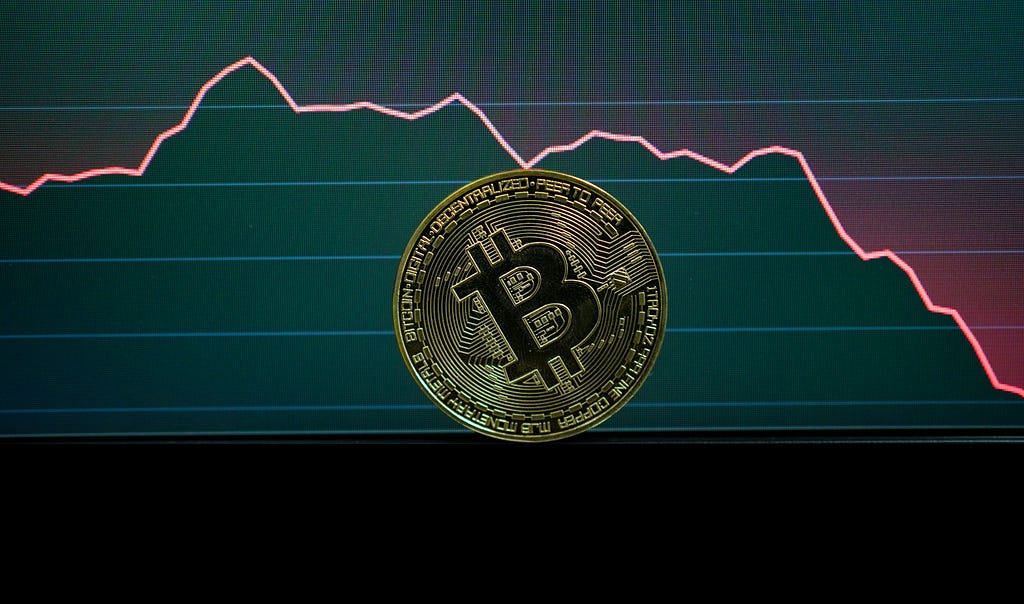
The biggest loss was not being able to accept reality.
In the four months before I sold it, the coin was down 40% from what I entered. It’s less than 40% of the all-time high. That’s 40% of the price I paid. Given the amount I invested, my particular loss was significant enough to impact that quarter.
Over the course of those four months, I told myself a series of things I truly believed at the time. The basic principles of the project still remained the same. The price drop was part of the broader market noise. Selling at this level will result in losses and make recovery unnecessary. The next catalyst will change things.
None of it was completely false. The fundamentals were still intact. Broader markets were weak. Recovery was technically possible. But none of that was the real reason I was still holding on.
The real reason I didn’t really understand it until I took the time to honestly review the decision-making process after the final sale was that the loss would have been real if I had sold. The 40% drop was displayed as a number on the screen while I was holding it. This is a temporary condition. A situation that can still be reversed. The moment I sold, it became a permanent, confirmed, real loss, and part of my psychology was completely focused on preventing that confirmation.
The Psychology of Not Selling Losers
Loss aversion is one of the most documented phenomena in behavioral economics. The basic finding, repeated over decades of research, is that a loss feels about twice as bad as an equivalent gain feels good. A loss of $100 has roughly twice the emotional impact of a gain of $100.
This asymmetry has specific implications for how people manage losing positions. The potential profit from a recovery that moves a position from a current loss to a smaller loss or back to breakeven feels incredibly attractive compared to the specific loss from selling. Emotional logic drives holding even when recovery is unlikely and the potential for further declines is significant.
This mechanism is strengthened in cryptocurrencies due to the extreme nature of profits and losses that occur in the market. Bitcoin and major altcoins regularly generate moves of 30%, 50%, and 70% or more in both directions. This creates a story of actual recovery from what appeared to be terminal decline. That history serves as evidence for holding traders that patience can pay off, even if the current situation is not structurally similar to previous recoveries.
Every experienced cryptocurrency participant has experienced a sharp decline and recovery in their assets. The availability of such memories makes the recovery scenario seem more plausible than it would otherwise. The brain reaches for the most likely example of a similar situation being resolved positively and uses that as a reason to hold on.
A specific trap I was in
The position I held did not have a clearly defined retirement plan. It was a structural problem beneath a psychological problem.
When I took on this position, I did so based on a thesis regarding the potential of the project and the timing of certain development milestones. There was logic to the paper. That position made sense at the time of entry. But I didn’t define it. What can tell you that the thesis is wrong? At what price or after what event can I conclude that the reason I bought it is no longer valid?
Without that definition, the position has no natural exit conditions beyond entry recovery. The stops I was vaguely trying to decide on were never placed because I told myself that things would improve every day. The goal I imagined was somewhere in the future where development milestones would be recognized by the wider market.
This is a trap that most long-term cryptocurrency positions fall into. This paper is forward-looking and somewhat abstract. This entry is based on beliefs about what could happen. However, belief-based entry without a defined invalidation condition has no structural mechanism for exit when the belief turns out to be incorrect.
As a result, the position is managed entirely by psychology, not planning, and remains open indefinitely. And as explained above, psychological management of losing positions is systematically biased past the point where selling would be a rational option.
Why Cryptocurrencies Amplify This Specific Problem
The structure of the cryptocurrency market interacts with the psychology of holding losers in a particular way that makes the problem worse than in most other markets.
The first is that there are no dividends or cash flows that create a specific opportunity cost of holding. In the stock market, capital tied up in losing stocks can be deployed to generate dividends or other opportunities. In cryptocurrency, the capital of a declining token is simply decreasing. There is no rate of return to partially offset losses or remind holders that their capital can be used elsewhere.
The second is the spread of community narratives surrounding recovery. Every cryptocurrency project that has survived a significant downturn has a community that remains confident despite the downturn and can point to the eventual recovery as proof that their holdings were correct. These narratives are highly visible and widely shared. The narrative of a project that never recovered is less visible because the surrounding community disintegrated. Survivorship bias in cryptocurrency community storytelling creates an environment where recovery possibilities are systematically overestimated.
Third is the term flexibility of the cryptocurrency market. Because cryptocurrencies are traded continuously, there is no market that can force a revaluation. The question of whether to keep or sell is always open. In markets with defined trading hours, the end of the day creates a natural decision point. In 24-hour markets, the decision to hold is never forced into your consciousness. It basically continues.
What I should have done differently
If I had been in an increasingly losing position for four months, I should have had a written exit plan before I went in.
The plan should have specified: A level below my entry at which the paper would be considered invalid by price action. An event or non-event that signals a development milestone I’ve been waiting for won’t materialize within the expected time frame. The maximum amount of time I was willing to endure without a paper showing evidence of progress.
There is no need to predict the future for anything. I need to define in advance how I will change my assessment of the situation. That definition, made when I was calm and analytical rather than emotionally committed to a position, would have had different results.
At levels lower than my entry point, a stop would have occurred long before the 40% decline. If development milestones did not occur as scheduled, time constraints would have led to termination. One of these results would have been a much lower cost than the final sale.
The practical lessons are not complicated. The time to define exit conditions is before entry, not after the position has moved against you. After a position moves against you, any definition of liquidation terms is tainted by the losses already experienced and the psychological need to justify holding rather than selling.
Break the holding pattern
From that experience, I learned specific practices that I now apply to all positions in cryptocurrency.
Before I take on a position, I answer three questions and write down the answers.
First, what specific event or price level would indicate that this thesis is no longer valid? Your answer should be specific, not just a feeling. Price levels, specific non-occurrence of expected events, changes in on-chain behavior, specific things I can confirm.
Second, what is the maximum amount of time I can hold on to without evidence that the paper has progressed? A position that neither validates nor invalidates the thesis is a waste of capital without any productive purpose. Time limits on positions going nowhere are a legitimate and important part of portfolio management.
Third, if I had no position and was evaluating this opportunity anew today at the current price and terms, would I enter? This question is the most powerful of the three. This removes the sunk cost of existing losses from the equation and forces you to evaluate your current situation based on its real merits.
If the honest answer to the third question is no, you should terminate the position regardless of the loss of documentation. Regardless of whether the position was sold or not, the paper loss disappeared. The only thing an exit does is prevent capital from continuing to decline while it is in investments that will not result in new entry.
The market is uncertain and there are times when positions that should be sold are recovered after being sold. The results will happen occasionally and will be uncomfortable. It’s still the right decision. The alternative of holding every losing position in the hope of recovery is the much more common and much more costly result of watching manageable losses compound into catastrophic losses.
I finally understood why I had held on to my lost coin for so long and couldn’t let it go. Originally published on Coinmonks on Medium, where people are continuing the conversation by highlighting and responding to this story.