

Blockchain asks why the power should be in one place when everything is running on the screen. Trust may now grow sideways.
Nowhere is the connection stronger than it is today. Still, secrets travel at the speed of light as offices expand across countries and voices join through walls that no longer exist. Nevertheless, trust among people could not catch up.
Computers that handle money or data typically require helpers, such as banks, government officials, or institutions, to determine who owns what or whether a transaction was made. These brokers do a useful job, but they also introduce additional steps, fees, and risks if something goes wrong.
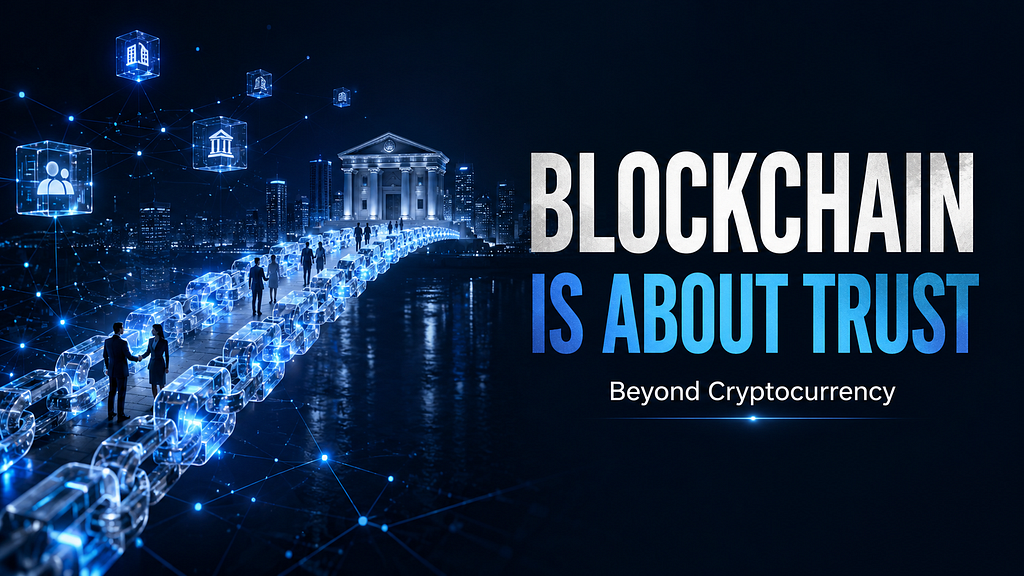
Now blockchain is starting to become important.
Even though people primarily associate it with cryptocurrencies, blockchain really focuses on building trust online. Instead of relying on just one central authority, multiple users can securely exchange data and work together to determine the truth.
The Problem of Online Faith
The owner of the house changes. Before that happens, multiple people need to verify owners, process paperwork, and review files. Then we move forward. This happens because no single group has the full trust of everyone involved.
Blockchain provides a single version of the truth that everyone can see from the start. No longer stuck with inconsistent records, people rely on one system that everyone checks together. It operates publicly, so each person sees changes without any intermediaries. Shared access means updates are immediately visible to all involved participants.
Stop the struggle and increase your trust in the process.
What if trust was alive in the code itself? This is what blockchain quietly proposes.
What Blockchain Means Without Jargon
Blockchain is essentially a digital record-keeping system.
Across the network, blockchain stores data instead of leaving it in the hands of one company. After verification, the information is locked in place and becomes nearly impossible to change.
It’s like a diary that everyone checks, but no one changes behind closed doors.
Confidence grows when collaboration follows clear rules. Resilience emerges where accountability is built into the design.
Lessons beyond technology
This leads to a useful set of ideas elsewhere in the code. Chains of trust appear in unexpected places.
Transparency creates confidence
When people see how choices are made, their faith in the system increases. Knowing the reasons behind results lifts the fog and builds stronger connections between people.
Verification strengthens trust
The truth is more important when it can be verified. Blockchain skips the guesswork by relying on evidence instead of faith.
Decentralization improves resilience
Having many people involved typically provides greater flexibility compared to a setup that relies on just one leader.
Benefits and Challenges
Suddenly, blockchain could change the way supply chains operate. Are there clear and reliable records? This means the challenges of managing patient data across hospitals can be reduced. Think about your diploma stored safely in a digital ledger. It benefits both schools and learners. Building a financial system based on open yet secure logs can help it operate more smoothly. Efficiency sneaks in where there was once chaos. Innovation tends to follow these changes.
Nonetheless, blockchain has its flaws. Even though rules are tightened, issues like speed limits still remain. Power use increases while people hesitate to participate. Tools on their own cannot solve real problems unless they are carefully crafted. Only smart planning makes a difference.
Leading change and building tomorrow
The sudden growth of blockchain signals a changing perspective on trust within businesses. Instead of top-down oversight, new solutions now place responsibility for design, often bypassing a central authority entirely.
As the pace of change accelerates, those in charge become trapped between machines and people. Continued growth depends less on new devices and more on whether people believe what they hear.
Looking into the future
Now the attention-grabbing blockchain is settling into real work. Nowadays, the focus continues to be on useful roles.
The most important thing is not to change the cash flow, but to change the way trust is transmitted between people. Whether you’re a bank, medical record, school, or city in operation, this technology opens up new perspectives on accessing evidence and data.
Now the truth is harder to find. Nonetheless, blockchain forces us to ask better questions. Who decides what is real? Maybe fairness starts with visibility. If the system is built right, it can be responsive to everyone.
What comes next depends on how we respond. Nonetheless, they remain weighty in every choice made online.
join the conversation
Do you think blockchain creates trust? Drop it below. I’m curious about technological change. Hit follow for new takes. The moves you make today may make the years ahead look different.
Curious people who like to write, explore ideas, and explore technology can also participate, and bringing new angles keeps things moving forward.
Blockchain was not about money, it was about trust. Originally published on Coinmonks on Medium, where people are continuing the conversation by highlighting and responding to this story.