

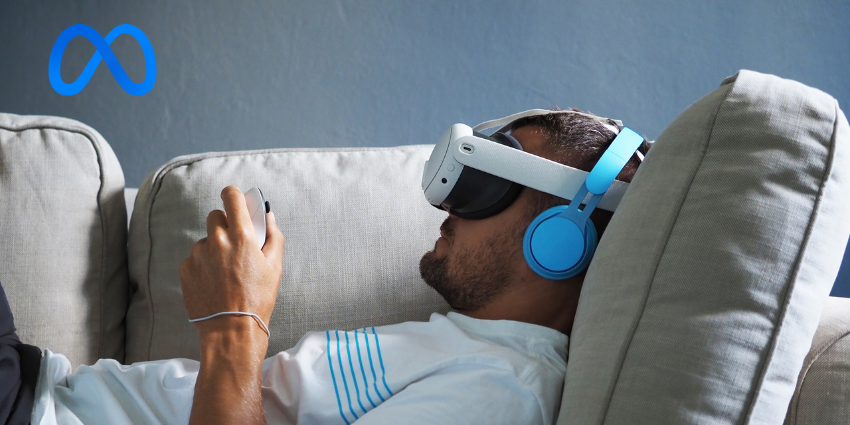
In the Corona era, when we all developed opinions on sourdough and celebrity montages attempted to heal the planet with John Lennon covers, the metaverse was presented as the next digital migration. It was supposed to be a shiny new land of virtual worlds where we would play, shop, meet, build, socialize, and eventually evolve into future beings who no longer needed good posture.
Then reality set in and people started asking awkward questions like “So… who actually uses this?”
Now, as 2025 comes to an end, the story has changed again. Augmented reality wearables are in the spotlight in the Metaverse as both consumers and businesses prefer technology to fit into their daily lives.
The $70 billion question
Meta didn’t just rely on the metaverse. In 2021, the company changed its name and poured money into its XR division, Reality Labs. Just as the gambler is confident that the next spin will be ‘the one’. The Meta Quest headset sparked interest from both businesses and consumers, giving Meta a 70% share of the VR/AR market by 2024, but failed to achieve the mass adoption Zuckerberg had hoped for.
The numbers were brutal. Reality Labs reported an operating loss of $4.4 billion in the third quarter of 2025, bringing cumulative losses to about $70 billion since the end of 2020. At this level of spending, people start to ask, “Will this pay off?”
Reality Check of Meta Connect
At Meta Connect 2025, the company’s new strategy was clear. Zuckerberg still envisions a world where XR replaces smartphones, but the practical path to get there is increasingly about AI-enabled smart glasses (a vision shared by Samsung and Apple) rather than clunky headsets.
The latest Ray-Ban collaboration, the new Oakley partnership, and Meta’s neural wristband work all point to Zuckerberg’s larger goal: a hands-free AR wearable that’s truly practical and, crucially, cool enough that people will actually want to wear it.
Meta also recently acquired AI wearables startup Limitless, demonstrating how confident it is in the technology’s potential.
Dan Siroker, Co-Founder and CEO, Limitless:
“Meta recently announced a new vision to bring personal superintelligence to everyone, and a core part of that vision is building amazing AI-enabled wearables. We share this vision, and we will be joining Meta to help bring this shared vision to life.”
It’s important to note that Reality Labs is responsible for both the Metaverse project and AR technology, but this budget cut signals a clear restructuring focused on wearable technology.
Building Everyday Skills
Metaverse pitches have always been grand. Maybe too grand. They asked everyone to move somewhere else – virtual spaces, virtual identities, virtual everything – and then tried to sell it as “frictionless.”
AR is the opposite. It integrates seamlessly into people’s daily workflow, giving them easy access to what they need without disrupting face-to-face interactions. The difference is important because humans are generally not a species that likes to switch things up. We barely tolerate changing tabs…
The original Metaverse Dream was building: Building the world, economy, identity system and social gravity. AR is similar to interior design. It enhances what already exists, adds information, and provides context.
Escape to Utility
The Metaverse asked people to transfer their lives into a virtual world, but most didn’t. AR wearables flip the model on its head. Rather than replacing reality, it enhances it by combining AI-based assistance with existing habits and workflows. Meta’s pivot represents the same lesson the market continues to teach. The future of spatial computing comes not from building new destinations, but from improving the ones we already live in.