

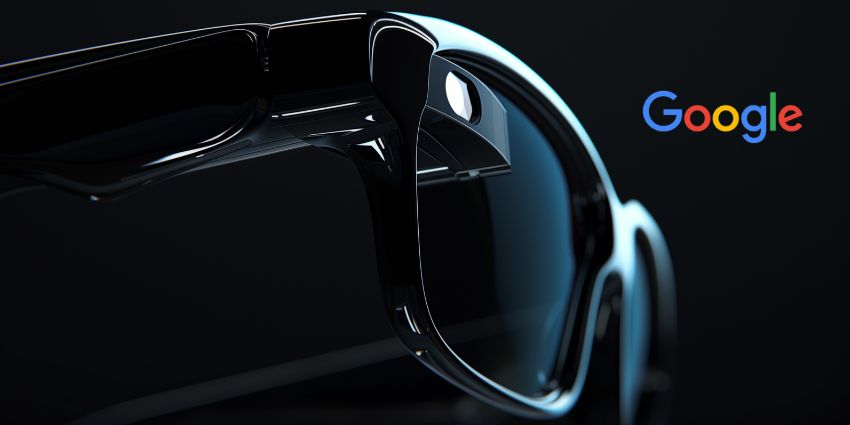
Google has confirmed that its Android XR platform will launch its first audio smart glasses later this fall. This marks the company’s most serious return to wearable glasses since the Google Glass era. The launch forms part of a broader strategy around Gemini AI, with Google positioning the smart glasses as a new everyday interface for AI rather than a niche experimental device.
The glasses will initially focus on audio-based interaction, allowing users to access Gemini via voice prompts or touch controls built into the frame.
Rather than launching a single product on its own, Google is entering the market through partnerships with Samsung, Gentle Monster, and Warby Parker. The move suggests the company is attempting to balance consumer-friendly design with advanced AI features, an area that has previously hindered smart glasses efforts across the tech industry.
Google’s efforts to make Gemini your everyday assistant
The first Android XR glasses will focus on voice interaction rather than augmented reality displays. Users can activate Gemini by saying “Hey Google” or tapping the side of the frame, and the AI assistant can answer questions, interpret what’s going on around you, and perform tasks without having to take out your phone.
Google outlined several real-world use cases built around hands-free computing. Glasses can identify nearby landmarks, describe objects in the field of view, interpret parking and road signs, and provide directions based on the wearer’s exact orientation and location. The focus appears to be less on futuristic holographic experiences and more on assisting you to be aware of your surroundings throughout the day.
These glasses also integrate with Android and iOS smartphones. Users can send texts, manage calls, get missed message summaries, and access apps through voice interaction. Google has emphasized integration with services like Uber, Mondly, and DoorDash, positioning Glasses as an extension of the existing mobile ecosystem rather than a standalone device.
Another key component is real-time translation. Google says the glasses will be able to read menus and signs aloud in other languages while translating voice conversations in real time. By combining photo and video capture capabilities, AI-based image editing, and the ability to handle multi-step tasks, the company is clearly attempting to position Gemini as more than just a chatbot. Instead, Google wants Assistant to function as a persistent digital layer between users and the real world.
Importantly, Google also revealed that these audio glasses are only the first category for Android XR. The second category, display glasses, which can project information directly into the user’s field of view, is expected to be released in the future. That roadmap indicates that the company views wearable AI as a long-term platform play rather than a single hardware launch.
XR Race: The Next Major AI Battlefield?
Google’s return to smart glasses may ultimately be remembered more as a signal about the future direction of the AI industry than the hardware itself. Over the past two years, the dominant AI conversation has focused on the enterprise side, including models, infrastructure, and the war for talent. Companies have spent millions of dollars recruiting elite researchers and engineers while competing aggressively to build the most capable systems.
However, consumer AI still lacks clear mainstream use cases. While smartphones remain the primary gateway to AI assistants, many technology companies appear increasingly convinced that wearable devices could be the next major interface layer. Smart glasses, in particular, provide a way for AI systems to be continuously present without the user having to constantly look down at the screen.
This possibility helps explain why Google and Meta are now integrated into the same space. Both companies have previously invested heavily in virtual and augmented reality, with mixed success. While Meta has invested billions of dollars pushing VR through its Quest headset and broader Metaverse ambitions, Google’s early wearables efforts never gained mainstream traction. Despite years of hype, VR has largely failed to become a mass-market consumer technology outside of gaming and professional applications.
But smart glasses could be radically different. Mehta appears to have recognized this change earlier than most people. Ray-Ban smart glasses have gained surprisingly strong traction by prioritizing style and usability over an overly futuristic aesthetic. The glasses looked ordinary enough to be worn socially while offering cameras, AI support, and audio capabilities.
Google appears to have noticed this. Partnerships with Gentle Monster and Warby Parker suggest a deliberate attempt to avoid the mistakes of earlier wearables, which were bulky or overly technical. At the same time, cooperation with Samsung highlights a slightly different strategic angle. While Meta has leaned heavily on fashion branding through Ray-Ban, Google’s partnership with Samsung suggests a greater focus on technology integration and developing a broader XR ecosystem.
The results could mark the start of a whole new competitive front: not just the AI race, but the XR race.
Where Consumer AI Could Head Next
While Google didn’t provide pricing details or an exact launch date beyond “later this fall,” the announcement provides an important indicator of how major tech companies increasingly view the future of AI interactions. The focus is shifting from isolated chatbot experiences to continuous situational awareness systems embedded in our daily lives.
The Android XR strategy also reflects a broader recognition across the industry that hardware is important again. For years, software ecosystems have dominated consumer technology discussions. But AI is forcing companies to rethink the importance of physical interfaces that can simultaneously support voice, sensors, cameras, and real-time contextual processing.
It remains unclear whether consumers will ultimately embrace smart glasses at scale. Privacy concerns, battery limitations, social acceptance, and pricing can all be major barriers. Previous waves of wearable technology have shown that technical capabilities alone cannot guarantee mainstream adoption.
Still, the early momentum of AI-powered glasses suggests this category may have a stronger footing than previous VR and XR efforts. Rather than trying to transport users entirely into a virtual world, the product aims to augment everyday tasks in subtle ways that can feel immediately useful. This distinction can be very important.