
India’s Crypto Future Depends on Clarity, Not Just Taxes — CoinSwitch Co-Founder Says

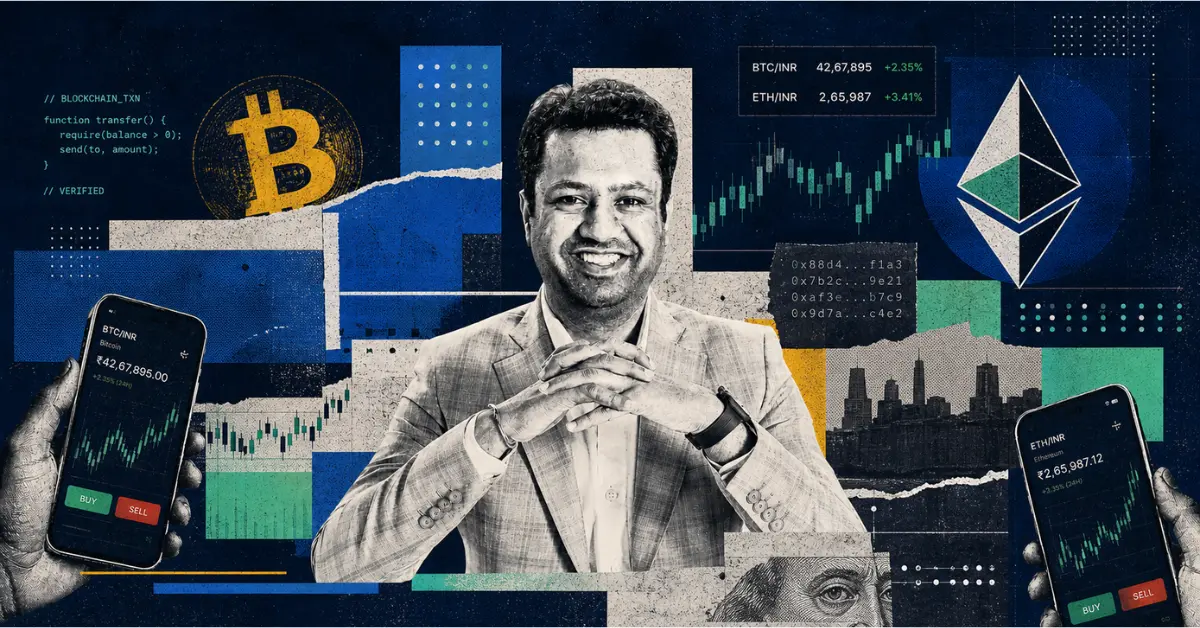
India’s cryptocurrency story is moving forward, but not without friction. In an exclusive conversation with Coinpedia, CoinSwitch co-founder Ashish Singhal explains everything from CBDC and UPI dominance to the 2026 budget, taxation, and why startups are quietly turning their gaze overseas.
UPI dominates, but CBDCs play a different game.
Singhal made it clear that there is no shortage of payment solutions in India. The Unified Payments Interface already makes transactions easier, whether you’re paying a supplier or splitting a bill.
However, CBDC does not compete with UPI. It’s something deeper.
He explains that a CBDC is essentially digital cash on your phone, like a 100-rupee note issued by a central bank. The real strength lies in the targeted use cases. Government subsidies can be programmed for specific expenditures, and emergency funds can be delivered to citizens immediately without intermediaries.
According to him, UPI is the ‘road’ and CBDC becomes the new ‘vehicle’ that runs on it. For the user, the experience won’t change, but the backend will become much more powerful.
Budget 2026: Reassuring clarity
India Budget 2026 left cryptocurrency taxes unchanged, continuing one of the most stringent regimes globally.
Singhal sees this not as an attempt to kill retail engagement, but rather to control it. The framework has brought clarity and improved traceability, even as high taxes and 1% TDS have pushed some activities offshore.
He suggested that the government is prioritizing responsible investment and regulatory compliance. However, going forward, a more balanced tax structure aligned with different asset classes will enable us to achieve real growth while maintaining innovation within India.
Startups are watching… is moving
Moreover, regulatory ambiguity remains a bigger concern than taxes.
Singhal points out that many Web3 startups are moving to hubs such as Dubai, Singapore and Hong Kong. These hubs provide easier access to banking, capital and partnerships due to clearer rules.
India still has a strong advantage of a large developer base and user market. But without clear, balanced regulation, that edge can slowly erode.
Bitcoin ETF and What’s Next
On the Bitcoin ETF issue, Singhal takes a grounded view.
He said India is still figuring out the basics, how to classify crypto assets, who to regulate and how to protect investors. Products like ETFs will only come out once the fundamentals are established.
Nonetheless, global momentum is hard to ignore, especially following the approval of US ETFs. Institutional demand in India is already building, especially among investors seeking exposure to cryptocurrencies without holding them directly.
Why regulation is slower than adoption
Singhal ends with a reality check.
Cryptocurrency is not just another field. This has implications for capital controls, taxation, AML and financial stability. This means there are multiple regulators involved, which naturally slows things down.
India is taking a “risk-first” approach, building guardrails through taxation and compliance while observing how global frameworks evolve, he says.
Meanwhile, adoption doesn’t wait. It is market-driven, fast and already ahead of policy.
And the gap between speed and structure is where India’s cryptocurrency future will ultimately be determined.
Was this article helpful?
The story ends here
Trust CoinPedia:
CoinPedia has been providing accurate and timely cryptocurrency and blockchain updates since 2017. All content is produced by an expert panel of analysts and journalists following strict editorial guidelines based on EEAT (Experience, Expertise, Authority, Credibility). All articles are fact-checked against reputable sources to ensure accuracy, transparency and reliability. Our review policy ensures unbiased evaluations when we recommend an exchange, platform, or tool. We strive to provide timely updates on all things cryptocurrency and blockchain, from startups to industry majors.
Investment Disclaimer:
All opinions and insights shared represent the author’s own views on current market conditions. Please do your own research before making any investment decisions. Neither the author nor the publication is responsible for your financial choices.
Sponsorship and Advertising:
Sponsored content and affiliate links may appear on our site. Ads are clearly visible and our editorial content is completely independent of our advertising partners.
Read the next news