

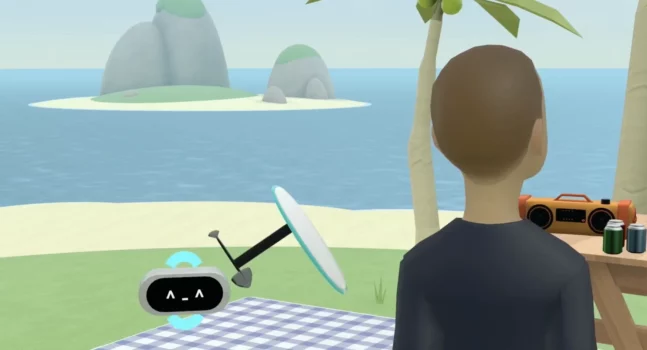
Meta announced this week that it is discontinuing its virtual reality version of Horizon Worlds, a platform that was once the centerpiece of Mark Zuckerberg’s Metaverse betting.
According to Meta’s announcement, starting June 15, users will no longer be able to build, publish, or update VR worlds or access Meta Horizon Worlds on Meta Quest headsets.
The platform will survive only as a standalone mobile app.
It’s a surprising ending to a project that led Zuckerberg to rename his entire company.
In October 2021, when Meta was renamed by Facebook, Zuckerberg called the Metaverse “the next frontier” and wrote: “Our hope is that within the next 10 years, Metaverse will reach one billion people, host hundreds of billions of dollars in digital commerce, and support the jobs of millions of creators and developers.”
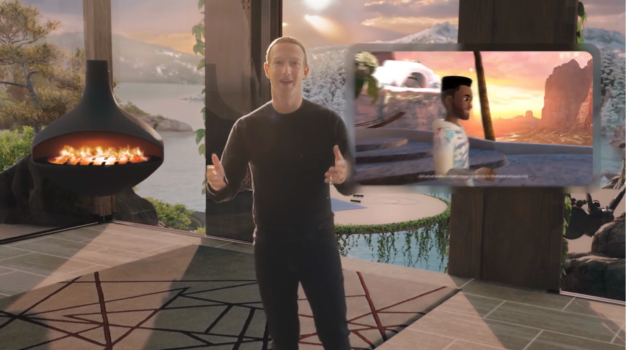
Well, that didn’t go as he planned. In his video announcing the metaverse that I forced myself to watch at the time, Zuckerberg looked a bit like a lizard.
If you want a little blast from the past, you can watch his full keynote presentation below.
Who and when will support be deprecated?
According to Meta’s announcement, by March 31, Horizon Worlds and Events will disappear from the Quest Store, and Meta’s own showcase worlds – Horizon Central, Events Arena, Kaiju, and Bobber Bay – will go dark in VR.
Horizon-related Meta Horizon Plus benefits, including Meta Credits, digital apparel, and in-world purchases, will also be removed from your subscription.
Users who have already downloaded Horizon Worlds can continue playing it in VR until June 15, after which the app will be completely removed from Quest.
This week’s announcement wasn’t the first shoe.
In February, Meta permanently shut down Horizon Workrooms, a VR meeting platform introduced to office workers as a replacement for Zoom, and deleted all user data. According to Snazzy Solutions’ business impact analysis, the company has stopped selling commercial Quest headsets and stopped accepting new customers for its Quest for Business program.
In January, Reality Labs laid off more than 1,000 employees and closed its VR studios, including Ouro Interactive, an in-house studio founded in 2023 specifically to produce its Horizon Worlds content, according to Bloomberg.
bill is due
According to Meta’s fourth quarter and full-year 2025 earnings report, Reality Labs lost $19.19 billion in 2025 alone, bringing its cumulative losses since 2020 to $83.6 billion.
Samantha Ryan, Reality Labs’ vice president of content for Meta, said in a February blog post that Meta would “double down on the VR developer ecosystem while shifting Worlds’ focus almost exclusively to mobile,” calling the closure a “doubling down” rather than a setback.
“By breaking things down into two different platforms, we will be able to focus more clearly on each,” she added.
Ryan also insisted that Meta remains committed to VR. She said Meta remains “the largest single investor in the VR industry” and believes VR is “an important technology on the path to the next generation of computing platforms.”
Sales impossible for business purposes
The failure of Horizon Workrooms, Meta’s enterprise VR meeting platform, was fully expected.
If you’re in a Zoom meeting, you can check your email, open your calendar, share your screen, use the whiteboard, and access recordings and transcripts. Everyone probably already has Zoom installed. Everyone already has a camera.
If you want to run the same meeting in VR, you’ll first need to find a headset. Please recharge. Download all accumulated updates. Remember how to use it. Learn how to share meeting invitations. Make sure all your companions are equipped. Teach at least one of them how to use it.
This makes the screen difficult to read when you actually join the meeting. Desktop apps are not easily accessible. Typing is difficult or impossible. When something urgent comes up, I can’t check my phone.
Not practical for 99.9% of business use cases.
I actually tried to work on VR. I really did. I tried to engage my team. They even gave away free headsets. It’s a very hard sell. There’s really no benefit to working in VR. These are all shortcomings…
And in the rare cases where VR is appropriate, such as reviewing a physical product mockup with a distributed team, you’ll need to upload that mockup to Meta’s servers. Meta has access to all discussions about it, all related documentation, and all internal details of the product development process. For any company that is serious about its intellectual property, that alone could be a deal breaker.
This is a problem Horizon Workrooms has never solved. The consumer version had the same problem. Wagner James Au, a long-time virtual worlds journalist, told The American Prospect that Horizon Worlds “didn’t really get the social aspect right. It’s a virtual community, so it needs to feel welcoming. There needs to be people who want to hang out with the experience.”
What Second Life and OpenSim got right – sort of
Meanwhile, Second Life, which was released in 2003 before the iPhone existed, is still operating.
The same goes for hundreds of OpenSim grids, many of which are run by volunteers on shoestring budgets. Hypergrid, a network of interconnected OpenSim worlds that allow avatars to teleport between grids while retaining their appearances, belongings, and friend lists, will never lose $19 billion a year. Plus, you’ll never end up reporting quarterly earnings.
The contrast with the meta is stark. Second Life’s virtual economy moves about $650 million annually, and Linden Lab has paid out $1.1 billion to creators over the life of the platform. Fourteen of them became millionaires selling virtual fashion and real estate, according to an analysis of the platform’s history by game developer Philip Ludington.
In comparison, Meta has never built a functioning creator economy. Second Life users retain the copyright to their content, but Meta Horizon Worlds grants Meta sole control of the content and usage rights. It was a closed ecosystem operated by a single entity.
Revenue split made the situation even worse. When Meta tested in-app purchases, creators received only 52.5% of pre-tax revenue, excluding platform fees. Philip Rosedale, now CTO of Linden Lab and founder of Second Life, called Meta’s fee structure self-defeating, telling PC Gamer: He noted that at the time, Linden Lab paid the Second Life creator $86 million in one year.
The magic sauce of Second Life wasn’t technology.
Meta felt that better graphics and VR immersion would help it succeed. Sansar thought VR native design would do just that. High Fidelity believed that next-generation infrastructure would make this possible. Decentraland thought blockchain ownership would do that. None of that worked, Ludington says, because the advantage of Second Life is not the technology but the culture, economic infrastructure, and relationships built within a shared world over 23 years.
OpenSim has something much harder to replicate. It is completely open source, decentralized, and owned by no one. No corporate board of directors can decide to close it. No quarterly earnings report can kill it. It’s more about how the internet works and why I’m a huge fan. And that’s why I’ve been writing about OpenSim for the past 17 years.
Personally, I don’t think a closed metaverse is a good idea.
What ends the meta and what remains?
Many headlines this week said, “The meta is killing the metaverse.” Including mine. That’s how you get clicks, right?
But that’s not the whole picture.
End VR:
- Horizon Worlds — VR version only: Removed from Quest Store by March 31; The app itself was removed from all Quest headsets on June 15, according to Meta’s announcement.
- Horizon Workrooms: Meta’s VR office meeting platform was shut down in February and all user data has been deleted, according to PC Gamer.
- Quest for Business: Meta stopped selling commercial Quest headsets and accepting new enterprise customers in February, according to PC Gamer.
- Meta’s own VR content: Meta acknowledged on its developer blog that 86% of the time Quest users spend on their headsets is already using third-party apps. This means that its own content has little to do with how people actually use their devices. The company has now permanently closed its three in-house VR studios.
- Horizon Feed and Worlds buttons on the Quest interface: According to Engadget, the headset’s new Navigator UI will boot into a grid of installed apps with the Horizon social feeds removed.
Still available:
- Quest Headset: Still for sale. According to its developer blog, Meta says it has a “robust roadmap for future VR headsets that will cater to a variety of customer bases.” According to Tom’s Guide, the next generation of gaming headsets is in development.
- Third-party VR games: Beat Saber, Superhot VR, Gorilla Tag, and thousands more still available on Quest. Meta has invested nearly $150 million in its VR developer program in 2025, with new releases including Hard Bullet, The Thrill of the Fight 2, and UG each generating millions of dollars in revenue, according to Meta’s developer blog.
- Horizon Worlds as a mobile app: Repositioned as a Roblox-style mobile gaming platform, it survives on iOS and Android. According to its developer blog, Meta said mobile monthly active users will more than quadruple in 2025, with four mobile creators reaching $1 million in lifetime revenue.